


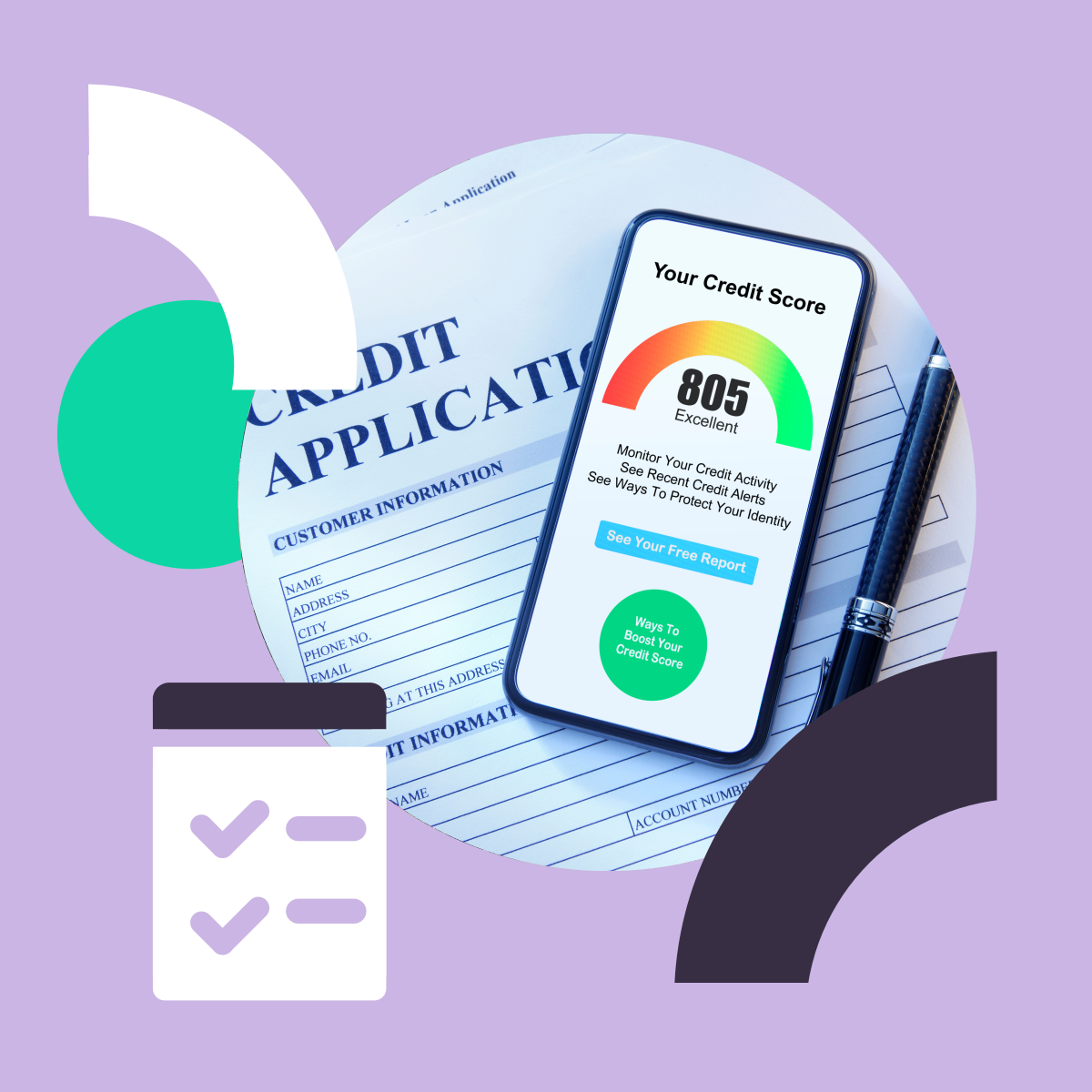
Your credit score impacts many areas of your financial life, including your ability to qualify for low-interest loans, affordable insurance, and apartment leases. If you’re an aspiring homebuyer, this three-digit number can also make or break your mortgage eligibility.
So, what’s considered a “good” credit score for a mortgage? And how do mortgage lenders interpret the different credit score ranges?
Below, we’ll explore the five credit score ranges and what they mean to lenders. We’ll also provide some practical tips to improve your credit score so you can unlock better financing opportunities.
Table of Contents
What Do the Credit Score Ranges Mean?
Credit scores range from 300 to 850. The higher your score, the better it is. Here’s an overview of how lenders interpret the following credit score:
- 800–850 – Excellent: You’re a low-risk borrower who will most likely receive the best rates, terms, and loan options.
- 740–799 – Very good: Your credit history shows that you’re dependable, so you’ll most likely receive favorable mortgage offers and lower interest rates.
- 670–739 – Good: Your credit score shows that you’re a relatively reliable borrower, though you may not qualify for the lowest rates available.
- 580–669 – Fair: You may qualify for certain mortgage loan programs, but you’ll likely face higher rates and less favorable loan terms.
- 300–579 – Poor: If your credit score falls within this range, you’ll likely face significant challenges qualifying for financing.
FICO® vs. VantageScore®: What’s the Difference?
FICO® and VantageScore® are the two most widely used credit scoring models in the United States. Each model has its own scoring formula and range interpretation.
Traditionally, FICO has dominated the mortgage industry, while VantageScore has been more popular in credit monitoring and borrower education. However, that’s changing in 2025. The Federal Housing Finance Agency (FHFA) now allows lenders to use the Classic FICO model or VantageScore 4.0 when evaluating mortgage applications, and it will start accepting FICO 10T in the near future.
Read More: New Changes Coming to Credit Scoring Models & Credit Reporting
While both credit scoring models employ a 300-850 range, they differ slightly in their quality evaluations:
FICO® Score Ranges
- 800–850 – Exceptional
- 740–799 – Very Good
- 670–739 – Good
- 580–669 – Fair
- 300–579 – Poor
VantageScore® Ranges
- 781–850 – Excellent
- 661–780 – Good
- 601–660 – Fair
- 500–600 – Poor
- 300–499 – Very Poor
Read More: Consumer Credit Score vs. Mortgage Credit Score: What’s the Difference?
What Factors Affect Your Credit Score?
Your credit score is influenced by five factors: payment history, credit utilization, length of credit history, credit mix, and new credit inquiries. Some of these factors are more impactful than others, and the two credit scoring models weigh them slightly differently.
#1 Payment History
Your payment history shows how well you’ve paid your debts on time over the past seven years. This factor makes up 35% of your FICO credit score and 40% of your VantageScore.
Even one missed payment can ding your credit score by 50 to 100 points. The longer a payment remains overdue, the more it will harm your credit score.
If you allow a late payment to become 90 days or more past due, the creditor can sell the debt to a collections agency, damaging your credit score even more severely.
Read More: How Much Does a Collection Impact Your Credit Score?
#2 Credit Utilization
Credit utilization measures how much of your available credit you’re currently using. It’s worth 30% of your FICO score and around 20% of your VantageScore.
You can calculate your credit utilization by dividing your outstanding credit balance by your total credit limit. For example, if you have a credit limit of $10,000 and carry a $3,000 balance, your credit utilization would be 30%.
Lenders prefer approving applicants who maintain a low credit utilization, since it shows they stick to their budget without relying too heavily on borrowed funds. Thus, you should strive to keep your total credit utilization below 30% at all times and under 10% as often as possible.
#3 Length of Credit History
Your length of credit history measures the age of your oldest, newest, and average credit accounts. Having a longer credit history shows lenders that you have ample experience managing credit, improving their confidence in your creditworthiness. This factor accounts for 15% of your FICO score and 20% of your VantageScore.
#4 Credit Mix
Your credit mix considers the variety of credit accounts you’ve used so far. Lenders like to see that you have experience using both revolving accounts (credit cards, lines of credit) and installment loans (car loans, student loans, mortgages).
Credit mix makes up just 10% of your FICO score. In the VantageScore 3.0 model, it’s not listed as a standalone factor, but it’s a key component of “depth of credit,” which accounts for 21% of your score.
Learn More: Why Your Credit Mix Matters
#5 New Credit Inquiries
Every time you apply for new credit, a hard inquiry is added to your credit report. While a single inquiry only lowers your score by a few points, multiple inquiries in a short period suggest that you’re facing financial stress, especially if you’re applying for different types of credit at once.
However, credit scoring models understand the importance of rate shopping. If you apply for the same type of credit within a 14- to 45-day window, all of the associated hard inquiries will be weighed as a single inquiry, enabling you to shop around with multiple lenders without significantly damaging your score.
Why Do Mortgage Lenders Care About Your Credit Score?
Now that you understand what factors impact your credit score, you may be wondering why lenders care so much about this metric.
Since mortgage loans often involve six-figure sums, lenders want to minimize their risk of lending to someone who won’t pay them back. Your credit score helps lenders gauge how likely you are to repay your loan on time.
By assuring lenders that you’re a “low-risk” borrower, a high credit score can improve your:
- Chances of approval – Most loan programs and mortgage lenders have a minimum credit score they’ll accept. For example, conventional loans require a score of 620 or above, while FHA loans may accept scores as low as 580 (with a 3.5% down payment) or 500 (with a 10% down payment).
- Interest rate and monthly payment – A low interest rate can reduce your monthly mortgage payments and total interest costs. Even a 1% reduction can save you hundreds of dollars per month and tens of thousands over the life of the loan.
- Private mortgage insurance (PMI) requirements – Depending on your down payment and loan type, PMI may be required. Your credit score plays a key role in determining how much you’ll pay for this insurance.
Read More: What’s a Good Credit Score for a Mortgage
The Cost of Poor Credit
To showcase how impactful a strong credit score can be, consider this example: You take out a 30-year fixed mortgage for $350,000. Thanks to your “good” credit score, you qualify for a 7.0% interest rate, resulting in a monthly payment of $2,328. Over the life of this loan, you pay a whopping $488,281 in interest.
Now, let’s say you take some time to raise your credit score into the “excellent” range before applying. Your elevated score qualifies you for a 6.0% interest rate, lowering your monthly payment to $2,098 and saving you around $230 per month. Most notably, your total interest paid over 30 years falls to about $405,434, eliminating nearly $82,847 of interest.
Read More: Improving Your Credit: The Gift That Keeps on Giving
How to Raise Your Credit Score Before Applying for a Mortgage
Since a strong credit score can save you tens of thousands of dollars on your mortgage loan, it pays to apply with the highest credit score possible.
If you’re not in the “excellent” range yet, here are six tips to raise your credit score over time:
- Check your credit reports for errors – Nearly 45% of consumers have errors on their credit reports, with over 25% reporting errors that may limit their financing opportunities. If you’re one of them, you can enhance your credit score by reviewing your credit reports on AnnualCreditReport.com and disputing any inconsistencies with the credit bureaus.
Read More: Most Common Errors on Credit Reports & How to Fix Them - Commit to making timely payments – Your payment history is the most influential credit scoring factor. Thus, having a flawless payment history is one of the best ways to raise your credit score. If you struggle to make timely payments, consider enrolling in auto-pay or creating automated calendar reminders to avoid missing due dates.
- Pay down your credit card balances – Reducing your credit utilization can quickly improve your credit score, considering that it makes up nearly one-third of its calculation. You can optimize this key metric by maintaining lower balances on your credit cards and requesting a credit limit increase from your credit card providers.
- Avoid closing old accounts – Closing credit card accounts can reduce your average account age and your total credit limit, both of which can lower your score. Unless an account has high fees or other notable downsides, it’s better to leave it open and use it occasionally to keep it active.
- Don’t open new credit accounts – New credit inquiries can lower your credit score for up to six months, so you should avoid applying for new credit leading up to your mortgage application.
- Become an authorized user – If you have a trusted family member or friend with excellent credit, ask if they’d be willing to add you as an authorized user on their credit card account. This allows their positive credit history to be reflected on your credit report, which can help boost several areas of your credit score.
For more credit-boosting tips, check out our article, “How to Improve Your Credit Score.”
Credit Scores Are Just the Start: Learn the Rest With Certified Credit
While your credit score is one of the most critical metrics mortgage lenders consider, it’s not the only one. Lenders also want to see that you have a low debt-to-income ratio, a stable income, and a steady employment history.
If you want to learn how to boost your chances of mortgage approval, check out the Certified Credit blog! It contains a wealth of helpful resources for mortgage applicants and aspiring homebuyers.
Sources:
FHFA. Credit Scores.
https://www.fhfa.gov/policy/credit-scores
Experian. What Affects Your Credit Scores?
Equifax. Understanding VantageScore® Ranges.
https://www.equifax.com/personal/education/credit/score/articles/-/learn/vantagescore-ranges/
CBS News. How do you get a late payment removed from your credit report?
https://www.cbsnews.com/news/how-do-you-get-a-late-payment-removed-from-your-credit-report/
FHA. FHA Loan Requirements in 2025.
https://www.fha.com/fha_loan_requirements
Bankrate. Private mortgage insurance (PMI): What it is and how it works.
https://www.bankrate.com/mortgages/basics-of-private-mortgage-insurance-pmi/
Consumer Reports. Almost half of participants in Credit Checkup study find errors on credit reports; more than a quarter find serious mistakes.


