


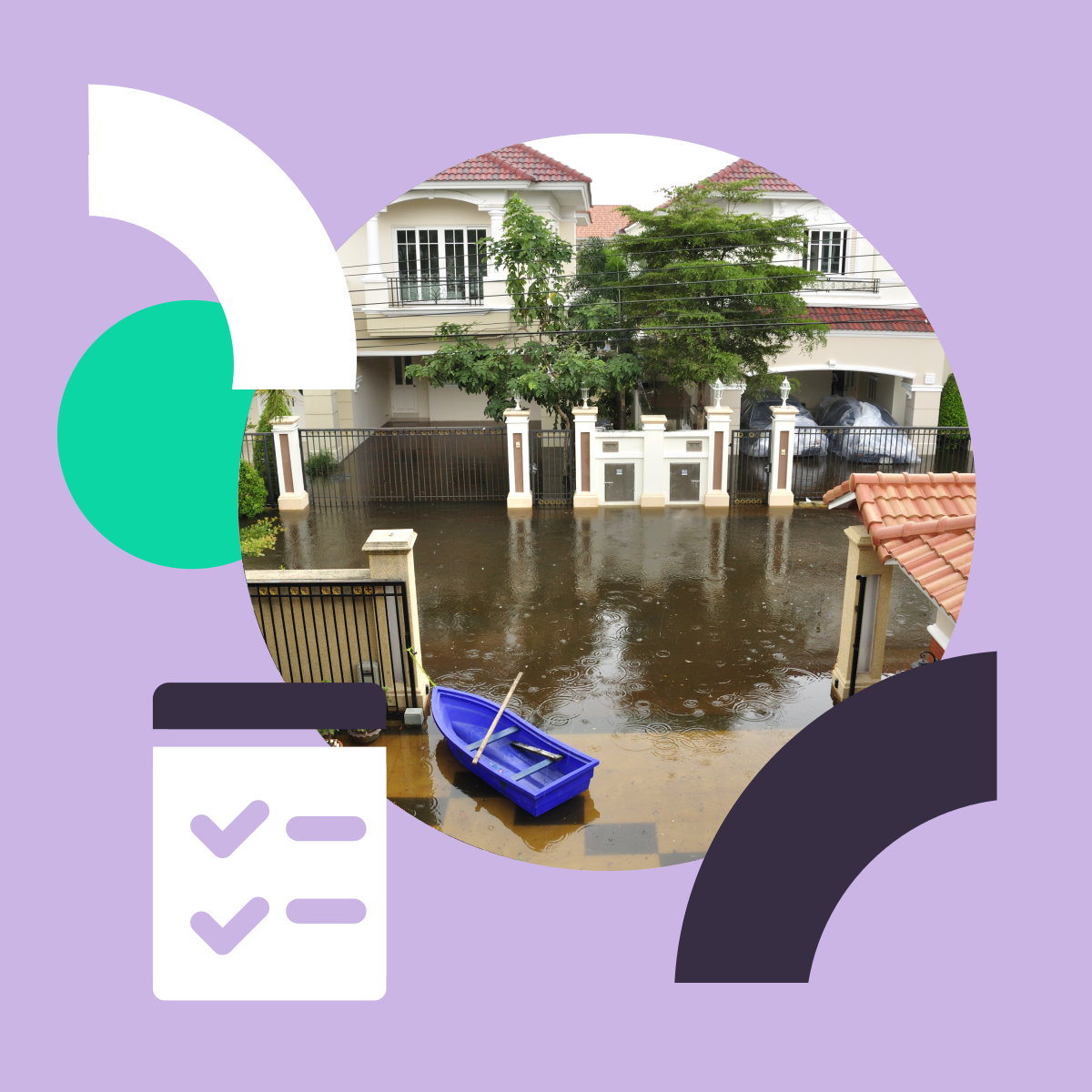
2024 was the hottest year on record. Devastating wildfires, severe flooding, and other natural disasters accompanied its historic heat. Despite global efforts to reduce greenhouse gas emissions, scientists predict these extreme weather events will only become more frequent and severe.
As a mortgage lender, you can’t afford to let rising waters wipe out your loan portfolio. Fortunately, you can protect your profits and support your borrowers by employing up-to-date Flood Zone Determinations.
Below, we’ll examine why flood risk is increasing across the United States and outline your obligations as a mortgage lender. After that, we’ll break down the benefits of using a reliable Flood Zone Determination solution and educating your borrowers on their insurance requirements early on.
Table of Contents
How Climate Change Relates to Flood Risk
Flooding is becoming increasingly common across the country. Scientists predict that by 2050, floods will occur ten times more frequently than they do today.
So, why is flooding ramping up? Climate change is a key driver, as it amplifies three of the most powerful contributors to flood risk:
- Rising sea levels – Record heat is melting glaciers and ice sheets, adding more volume to the oceans. Seawater also expands at higher temperatures. Together, these shifts cause sea levels to rise. Over the next 30 years, sea levels are expected to rise by ten to 12 inches, with the Gulf Coast facing the greatest threat from encroaching waters.
- Heavier rainfall – Higher temperatures cause more water to evaporate into the atmosphere, which leads to more severe precipitation. What may have been a gentle drizzle a few decades ago can quickly become an extreme downpour in certain locations today. For example, the Northeast and Midwest regions of the U.S. have faced a respective 55% and 42% increase in heavy rainfall events since 1958.
- Warmer winters – Higher temperatures cause many regions to experience more rain than snow in the winter. This can cause rivers, streams, and reservoirs to swell earlier in the season, remain elevated for longer periods, and increase the likelihood of flash floods.
Other Factors Fueling the Flooding Surge
While climate change is a notable contributor to the rise in flooding, it’s not the only factor. Some other causes include:
- Urbanization – Paved surfaces and deforestation prevent water from seeping into the ground, increasing runoff and overwhelming drainage systems.
- Outdated infrastructure – Many of the nation’s existing levees, dams, and stormwater systems were built in the mid-20th century. These drainage systems are often ill-suited for today’s intense storms, leaving previously low-risk areas more vulnerable to flooding.
With this combination of factors, one thing is clear: flood risk is swelling. As waters rise, so does the need for reliable flood insurance, which is why many regulators and secondary market investors require it for vulnerable properties.
Read More: Climate Change’s Impact on Mortgage Lending & Flood Zone Determination
The Alarming Gap in Flood Insurance Coverage
As climate change escalates, more properties are being classified as “high-risk” by the Federal Emergency Management Agency (FEMA). Just take a look at these statistics:
- Up to 16 million homes and businesses without flood insurance are at a high risk of flooding over the next three decades.
- Even if global carbon pollution reduction goals are met, 2.5 million Americans will still live in at-risk areas for coastal flooding in 2050.
- Older adults carry a disproportionate amount of this risk, with nearly 540,000 people aged 65 and older living in at-risk areas.
To make matters worse, only 30% of homes in the highest-risk areas currently have flood insurance policies in place. Uninsured homeowners can lose their homes and everything within them during a severe flood. Meanwhile, their mortgage lenders are left exposed to:
- Increased default risk
- Loss of collateral
- Regulatory non-compliance
Flood Insurance: What Are Mortgage Lenders’ Regulatory Requirements?
As a mortgage lender, you must adhere to the requirements laid out by the National Flood Insurance Act (NFIA) and the Flood Disaster Protection Act (FDPA). These laws require lenders who originate federally regulated and insured loans to:
- Ensure their borrowers obtain flood insurance if their property lies within a Special Flood Hazard Area (SFHA) before closing. This requirement applies to new loans, as well as refinances, renewals, increases, or extensions of existing loans.
- Employ FEMA-approved Flood Zone Determinations to identify whether a property lies in a high-risk flood zone and monitor its flood status for the entire life of the loan.
- Alert their borrowers in writing if their property is found to be in a high-risk area at least ten days before closing and educate them on their insurance requirements.
Failing to fulfill these federal flood insurance requirements can lead to civil penalties and reputational damage among secondary market investors.
Read More: The Secondary Mortgage Market: How Can You Ensure Your Loans Meet Investor Requirements?
Certified Credit’s Comprehensive Flood Zone Determinations
At Certified Credit, we understand how important it is to have fast, reliable, and compliant flood zone data. That’s why we offer a wide range of Flood Zone Determination solutions, including our:
- Flood Basic report – This no-fluff report provides quick, accurate, and cost-effective determinations that are accepted by Fannie Mae, Freddie Mac, and other major investors.
- Flood Life of Loan (LOL) service – This comprehensive service provides continuous monitoring of your borrowers’ FEMA flood zone designations, delivering timely alerts whenever a property’s status changes. This allows you to stay compliant and keep borrowers informed without missing a beat.
- Flood QuickCheck tool – This preliminary risk screening tool allows you to check a property’s flood zone designation during prequalification, enhancing transparency and improving your debt-to-income (DTI) ratio assessments.
No matter which tool you choose, you can order Home Mortgage Disclosure Act (HMDA) and CensusTract data with your Flood Zone Determination reports. By embedding these convenient solutions into your workflows, you can protect your loans from unexpected flood-related disruptions and ensure they’re ready for sale on the secondary market.
Benefits of Employing Proactive Flood Zone Determinations
Staying in regulatory compliance isn’t the only benefit of using our Flood Zone Determinations. Two other advantages include:
#1 Providing Your Borrowers With Greater Cost Transparency
From private mortgage insurance (PMI) to closing costs, aspiring homebuyers have a lot of expenses to factor into their upcoming purchase. If their dream home is located in an SFHA, flood insurance may be another monthly expense they need to add to that list.
By evaluating your applicants’ properties early on, you can let them know about their flood insurance requirements from the start. In turn, they can prepare their budgets accordingly and prevent expected financial surprises that may disqualify them later on.
Read More: How “Money Dysmorphia” May Be Impacting Your Mortgage Lending Business
#2 Stronger Participation in the Secondary Loan Market
Selling loans on the secondary market is an essential strategy for maintaining adequate liquidity. To ensure smooth sales, you must satisfy your flood insurance requirements, including providing accurate documentation regarding a property’s flood zone status. Skipping this step can lead to costly buyback demands and reputational damage.
Read More: How to Protect Your Portfolio From Freddie Mac’s Mortgage Loan Buybacks
How to Educate Borrowers About Their Flood Insurance Requirements
The average cost of flood insurance is around $899 per year, which breaks down to around $75 per month. Not only can flood insurance be costly, but it often catches homebuyers off guard.
Many mortgage applicants are unaware that coverage may be mandatory, particularly if their property falls within a newly designated SFHA or if the previous owner didn’t carry a policy.
Without proper guidance, your borrowers may be surprised by the added expense. You can soften their shock by:
- Outlining their flood insurance requirements early on – Using tools like Flood QuickCheck, you can evaluate your applicants’ flood risk during prequalification and educate them early on. This way, they can seek out another property that falls outside of an SFHA if they want to avoid purchasing flood insurance.
- Explaining the rationale behind them – As flood zones continue to expand, more homebuyers will be required to carry flood insurance. You can help ease their resistance by framing the policy as a vital form of protection, as opposed to an added burden. After all, flood insurance safeguards their most valuable asset.
- Discuss the cost of their coverage – Help your borrowers understand how flood insurance will affect their overall monthly housing expenses, including its impact on their DTI ratio.
Read More: Understanding Debt-to-Income Ratios’ Impact on Mortgage Approval
Optimize Your Flood Compliance With Certified Credit
As climate change and flooding grow more extreme, you must take proactive steps to safeguard your portfolio, ensure regulatory compliance, and educate borrowers on FEMA’s evolving flood zones. Fortunately, our Flood Zone Determinations make this process a breeze. These reports can help you close more loans with confidence, avoid costly buybacks, and deliver a smoother borrower experience.
This solution is just one of the many products and services we offer a Certified Credit. You can also streamline your workflows with the help of our:
- Affordable credit reports
- Credit score improvement tools
- Automated prequalification
- Automated VOE
- Undisclosed debt monitoring
- Property and valuation tools
- Fraud and risk support
- Settlement services
Eager to stay afloat in today’s shifting mortgage landscape? Schedule a credit consultation with our team today!
Sources:
NOAA. 2024 was the world’s warmest year on record.
https://www.noaa.gov/news/2024-was-worlds-warmest-year-on-record
EPA. Climate Change Indicators: Weather and Climate.
https://www.epa.gov/climate-indicators/weather-climate
Earth.gov. 2022 Technical Report.
https://earth.gov/sealevel/us/resources/2022-sea-level-rise-technical-report/
GLISA. Extreme Precipitation.
https://glisa.umich.edu/resources-tools/climate-impacts/extreme-precipitation/
ABC7. Climate change-induced flood risk is increasing in the United States. But most don’t have insurance.
https://abc7.com/feature/flood-insurance-am-i-at-risk-for-will-my-home/13816334/
Climate Central. New U.S. Coastal Risk Map and Analysis.
https://www.climatecentral.org/climate-matters/new-us-coastal-risk-map-and-analysis
Wharton. Closing the Flood Insurance Gap.
https://esg.wharton.upenn.edu/centers-labs/climate-center/closing-the-flood-insurance-gap/
FEMA. The National Flood Insurance Act of 1968.
https://www.fema.gov/sites/default/files/2020-07/national-flood-insurance-act-1968.pdf
Federal Reserve. Flood Disaster Protection Act.
Nerd Wallet. How Much Does Flood Insurance Cost?
https://www.nerdwallet.com/article/insurance/flood-insurance-cost


